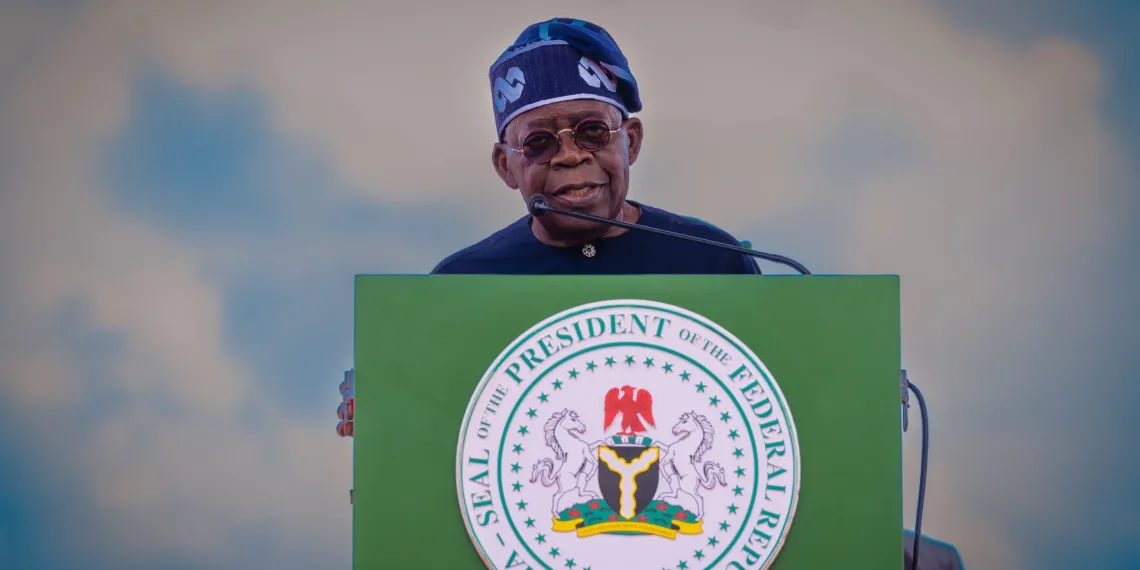
Tinubu Govt Accumulated More Debt in Two Years Than Nigeria Did in 55 Years — Report
A new report says the Tinubu administration added more public debt in two years than Nigeria accumulated between 1960 and 2015, raising concerns over fiscal stability and debt servicing.
Nigeria’s worsening debt profile and weak revenue performance are pushing the country closer to a major fiscal crisis, according to a new policy brief released by the Alliance for Economic Research and Ethics LTD/GTE.
The report, obtained by PulseNets, warned that the situation has moved beyond a simple debt challenge and has now become a full-scale revenue and governance emergency. The organisation noted that the Federal Government is currently spending more on servicing debt obligations than the actual revenue it retains.
In the policy document titled “Nigeria Is Borrowing to Breathe and the Clock Is Ticking,” the think tank revealed that Nigeria’s public debt rose significantly from N87.38 trillion in June 2023 to N159.28 trillion by the end of 2025.
PulseNets learnt that the administration of President Bola Tinubu was responsible for approximately N65.9 trillion of the increase recorded within its first two years in office.
The report described the development as alarming when compared with Nigeria’s historical debt accumulation pattern. According to the document, Nigeria accumulated about N12.06 trillion in public debt between 1960 and 2015, while the current administration added more than five times that amount within just two years.
The organisation, however, stated that the country’s debt burden was not caused by one administration alone. It explained that successive governments contributed to Nigeria’s worsening fiscal condition over the years.
The policy brief recalled that Nigeria had a rare opportunity to rebuild its fiscal strength after former President Olusegun Obasanjo secured debt relief from the Paris Club in 2005 and cleared a substantial portion of the nation’s external debt obligations.
According to the report, the debt relief era provided Nigeria with an opportunity to build stronger fiscal buffers through oil revenues and the Excess Crude Account, but the country eventually returned to aggressive borrowing patterns.
PulseNets reports that the brief stated that by 2015, under former President Goodluck Jonathan, Nigeria’s public debt stood at N12.06 trillion, although debt servicing levels were still considered manageable at the time.
The report further noted that Nigeria’s debt profile expanded sharply during the administration of former President Muhammadu Buhari, rising from N12.06 trillion in 2015 to N87.38 trillion by June 2023.
The organisation stressed that the major concern was no longer just the total debt figure but the increasing pressure debt repayment is placing on government earnings. It explained that although Nigeria’s debt-to-GDP ratio of about 35.5 per cent may appear moderate when compared with some African economies, the country’s debt service-to-revenue ratio paints a far more dangerous picture.
Further analysis of the report by PulseNets showed that Nigeria’s debt service-to-revenue ratio stood at 116.8 per cent in 2024 before dropping slightly to 113 per cent in the first quarter of 2025.
The report disclosed that the Federal Government spent N696.27 billion on debt servicing within the same period, while retained revenue stood at only N483.47 billion.
This indicates that the government is currently spending more repaying creditors than it is generating in retained revenue, a development economists consider highly risky for long-term economic stability, especially as Nigeria’s tax-to-GDP ratio remains around 8.2 per cent, significantly below the Sub-Saharan African average of 15 per cent.
Another major concern highlighted in the policy brief is the N25.3 trillion deficit proposed in the 2026 budget, which exceeds the three per cent threshold allowed under the Fiscal Responsibility Act.
The report warned that sustained borrowing and deficit financing could place additional pressure on the naira, worsen inflationary trends and further limit access to credit for private sector businesses.
PulseNets learnt that the current high-interest-rate environment is already affecting business operations across the country, limiting expansion opportunities, reducing employment capacity and slowing economic growth.
Also Read: Ohanaeze Tells Peter Obi to Drop 2027 Presidential Ambition Under NDC, Back Tinubu
The think tank urged the Nigerian Government to prioritise revenue generation and comprehensive tax reforms as part of efforts to stabilise the economy.
Among its recommendations, the report called for full digitisation of tax collection systems, expansion of taxation into digital and informal sector activities, improved transparency in public finance management and stricter enforcement of the Fiscal Responsibility Act.