Malala Yousafzai’s Foundation Secures Gender-Responsive Education Policies in Nigeria
Malala Yousafzai, Nobel Peace Prize laureate and co-founder of the Malala Fund, has said that the organisation is intensifying its collaboration with partners to secure gender-responsive policies for girls across Nigeria.
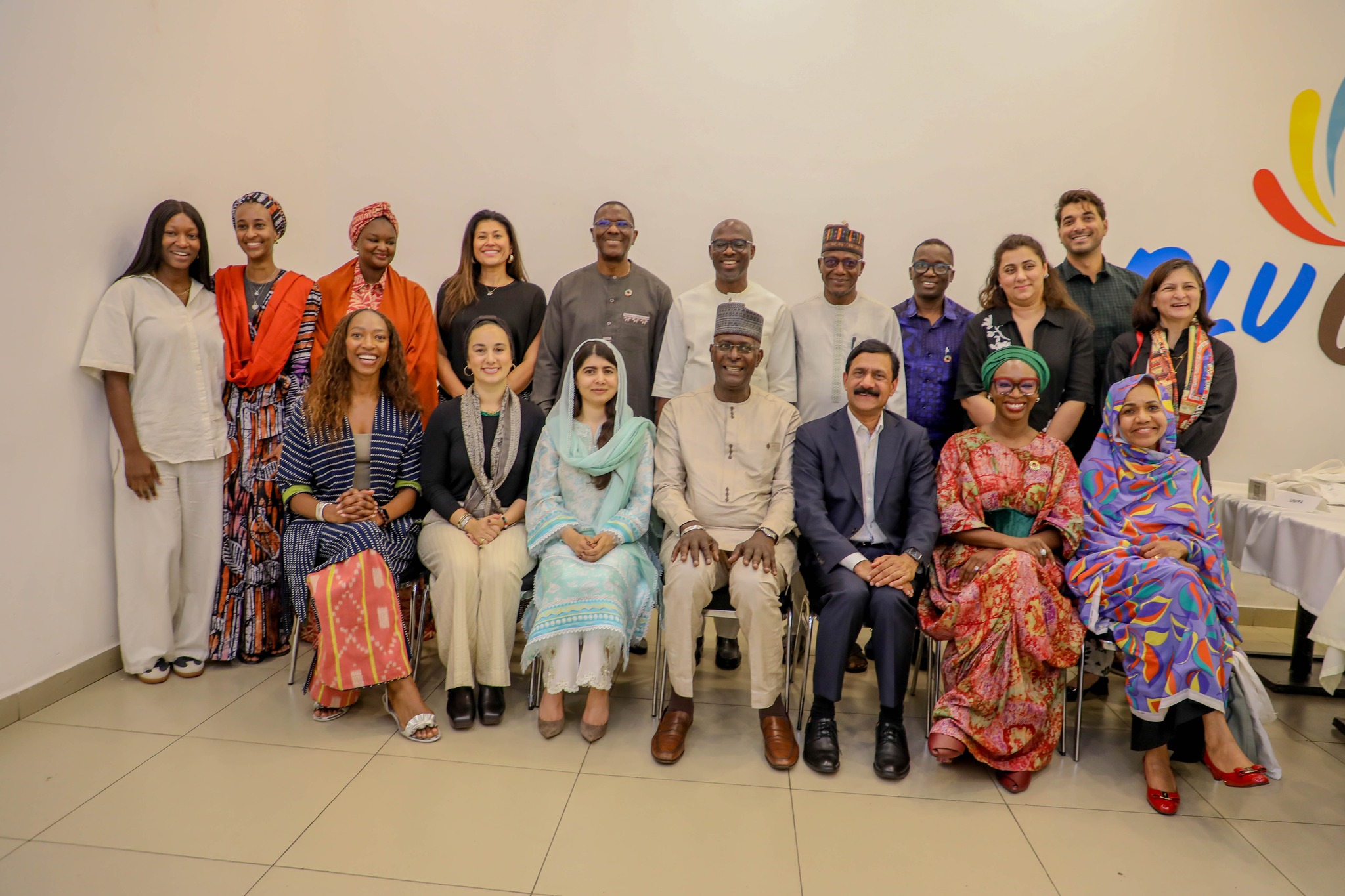
The young activist made this known while speaking to journalists at a high-level stakeholder dinner hosted in Abuja, themed “Partners in Change: Shaping the Future of Girls’ Education Together.” PulseNets learnt that Malala and her father, Ziauddin Yousafzai, who also co-founded the Fund, had arrived in Nigeria on Friday to engage with its board of directors and review ongoing projects.
Focus on Girls’ Education and Child Marriage
The visit, PulseNets obtained, is designed to advance the Fund’s priorities on girls’ education, espe
cially ensuring that pregnant and married girls are given a second chance to return to school. Malala Fund is also advocating increased education financing to cater to girls’ needs and position schooling as a key policy tool to end child marriage.
Malala told PulseNets that the Fund strongly believes in investing in grassroots education activists who are driving change within Nigeria. According to her, “I feel so privileged to be in the company of these incredible people who are at the forefront of this mission. Meeting the girls and the activists here in Nigeria makes me more determined than ever that change is possible. We will see that change in our lifetime when every girl in Nigeria enjoys her right to complete and quality education.”
She further explained that the Fund is committed to pushing for gender-responsive policies that guarantee 12 years of schooling for girls. “We have already seen positive results,” Malala said, adding that more collaboration is now required. “It needs commitment from all stakeholders, including ministers and government officials, to implement these policies effectively and provide the financing that makes real change possible on the ground.”
Nigeria’s Central Role in Malala Fund’s Mission
Describing Nigeria as a priority country for the organisation, Malala reported that nearly 5 million adolescent girls of junior secondary school age remain out of school. She stressed that Nigerian girls, like their peers globally, carry the same dreams, hopes, and determination to build their future.
“I am here as their sister to ensure their dreams become reality,” she told PulseNets, commending their resilience and persistence in fighting for education. “They know better than anyone that education is the best investment in their future.”
Local Partnerships Driving Impact
PulseNets also learnt from Nabila Aguele, the Fund’s Chief Executive in Nigeria, that Bridge Connect Africa, a partner organisation in Kano, is currently working with state legislators and the government on gender-responsive budgeting. She added that in Adamawa, a policy framework was successfully implemented with technical assistance from another partner, which is helping to shape re-entry programmes for girls who dropped out of school.
Aguele explained that Malala Fund partners are actively engaging families, communities, and traditional leaders to ensure that girls’ needs and aspirations guide local understanding and shape policymaking.
Also Read: Nobel Peace Laureate Malala Yousafzai Arrives Abuja for Girls’ Education Push
Malala, her father Ziauddin, the Fund’s CEO Lena Alfi, Ms Aguele, and board members also held an interactive session with young girls and education champions supported by the Fund, listening to their experiences and the changes they are advocating in their communities.
Since 2014, PulseNets learnt, the Malala Fund has invested more than $8 million in Nigerian partner organisations committed to breaking barriers that continue to keep girls out of school.