NLC Demands N154,000 Minimum Wage as Nigeria’s Cost-of-Living Crisis Worsens
Nigerian Labour Congress (NLC), through its affiliate Joint National Public Service Negotiating Council (JNPSNC), has formally demanded an upward review of the national minimum wage to N154,000 per month, citing the rapid erosion of workers’ income amid persistent inflation, surging food prices, and rising transport costs.
The demand was conveyed in a letter obtained by PulseNets and addressed to the Federal Government, signed by Benjamin Anthony (Chairman) and Olowoyo Gbenga (Secretary). The council warned that the current wage framework has become increasingly disconnected from prevailing economic conditions and called for the immediate commencement of tripartite negotiations involving labour, government, and the organised private sector.
In the correspondence, the JNPSNC stated that “no longer reflective of economic realities”, describing the existing minimum wage as insufficient to meet basic living standards across the country.
Key Demands and Concerns
The letter outlined several pressing issues affecting Nigerian workers:
-
The urgent need for a comprehensive upward adjustment of salaries and allowances across the public service to restore purchasing power.
-
The proposed N154,000 benchmark is aimed at ensuring a decent standard of living for workers and their families.
-
Continued inflationary pressure, estimated between 30–35% in recent data from the National Bureau of Statistics (NBS), alongside sharp increases in food prices and transport costs, has rendered the current wage structure unsustainable.
-
The demand is framed not just as a wage increase but as a critical intervention to prevent deeper socio-economic instability and sustain workforce productivity.
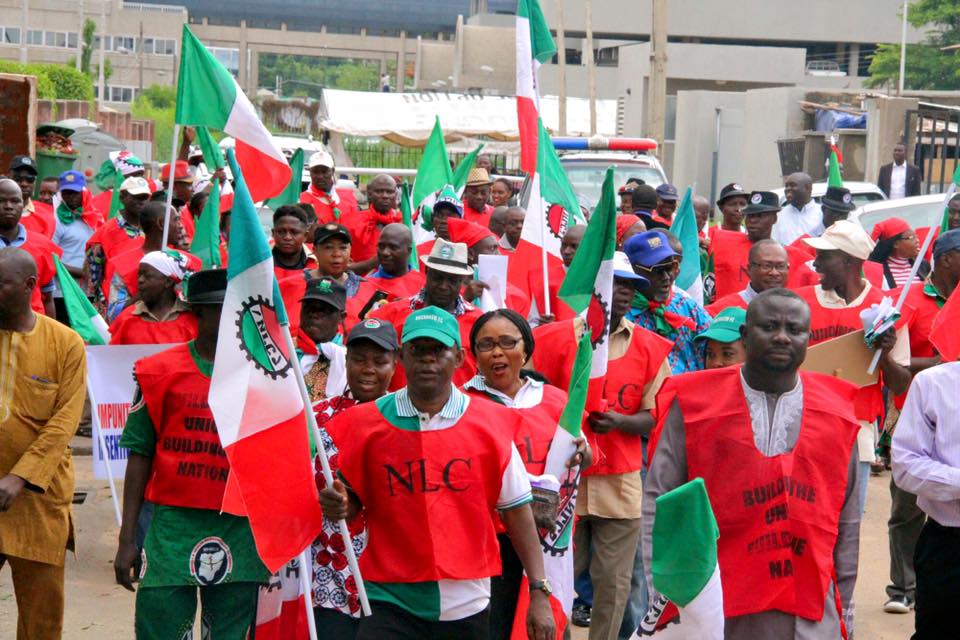
Labour leaders further warned that Nigerian workers are increasingly unable to bridge the widening gap between earnings and essential expenses. The letter cautioned that failure to respond promptly could trigger industrial action nationwide.
Broader Economic Context
PulseNets learnt that the renewed agitation is unfolding against a backdrop of mounting economic strain across the country:
-
The last adjustment of the national minimum wage to N70,000, which took effect in July 2024 after prolonged negotiations and strike actions.
-
Persistent concerns that inflation and naira depreciation have significantly weakened the value of the N70,000 wage.
-
Rising cost-of-living protests and hardship reports in major urban centres, including Port Harcourt, Lagos, Kano, and the Federal Capital Territory.
-
Ongoing but slow-moving tripartite committee discussions that have yet to produce a decisive outcome.
The NLC alongside the Trade Union Congress (TUC) has repeatedly signalled the possibility of a nationwide strike if substantial wage adjustments are not implemented, with the latest communication representing a formal escalation of labour’s position.
Government and Stakeholder Reactions
As of March 18, 2026, no official response has been issued by the Federal Ministry of Labour and Employment or the Presidency. However, sources familiar with the negotiation process told PulseNets that the demand is being viewed as ambitious given current fiscal constraints, even as authorities acknowledge the depth of the economic hardship.
Also Read: NLC, TUC to Hold February 3 Solidarity Rally Over Unpaid FCDA Workers’ Salaries
Representatives of the organised private sector, including groups such as the Nigeria Employers’ Consultative Association (NECA) and the Manufacturers Association of Nigeria (MAN), have historically raised concerns about the sustainability of significant wage increases. Similarly, several state governments have warned that higher wage obligations could place additional pressure on already strained sub-national budgets.