FG Moves to Deregister ADC, Accord, 3 Other Parties as Court Battle Targets INEC Ahead of 2027
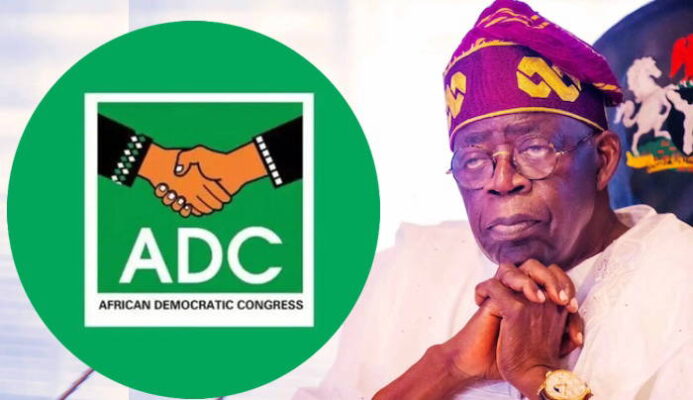
The Federal Government has moved to the courts in a bid to deregister five political parties, including the African Democratic Congress (ADC) and Accord Party, as the country edges closer to the next general elections.
In a newly filed suit before the Federal High Court in Abuja, it was reported that the Attorney General of the Federation is seeking an order compelling the Independent National Electoral Commission (INEC) to strike the affected parties off its official register.
The government maintains that the continued recognition of these parties contradicts constitutional provisions regulating political participation in Nigeria.
Court filings obtained by PulseNets show that the Attorney General cautioned that failure to act would mean INEC would “continue to act in breach of its constitutional duty” by allowing parties that have failed to meet statutory requirements to remain operational.
The case, marked FHC/ABJ/CS/2637/2026, was filed by the Incorporated Trustees of the National Forum of Former Legislators. INEC is listed as the first defendant, while the Attorney General of the Federation is the second defendant. The political parties involved include African Democratic Congress (ADC), Action Alliance (AA), Action Peoples Party (APP), Accord (A), and Zenith Labour Party (ZLP).
At the core of the legal battle is whether INEC is constitutionally obligated to deregister political parties that do not meet electoral performance thresholds as stipulated under Nigerian law. The plaintiffs insist that the commission lacks discretionary powers once such benchmarks are not achieved.
PulseNets learnt that the plaintiffs argued the affected parties failed to meet expectations during the 2023 general elections and subsequent by-elections. They noted that none of the parties secured the required spread of votes or won significant elective positions, yet they continue to enjoy recognition as legitimate political platforms.
The suit references Section 225A of the 1999 Constitution (as amended), alongside provisions of the Electoral Act 2022 and INEC regulations, which clearly outline the minimum requirements for political party registration and retention.
In a supporting affidavit, the forum’s National Coordinator, Igbokwe Raphael Nnanna, described the continued existence of the parties as unlawful. He stated that allowing them to operate despite failing to meet constitutional thresholds “is unconstitutional, illegal and a violation” of Nigeria’s electoral legal framework.
The plaintiffs are urging the court to declare that INEC is duty-bound to deregister any political party that falls short of these standards. They are also seeking an order compelling the commission to take action ahead of full-scale preparations for the 2027 general elections.
Beyond deregistration, the suit is pushing for stricter enforcement measures. It seeks to bar the affected parties from participating in future elections and prevent them from organising campaigns, rallies, or primaries until they comply with constitutional requirements.
Additionally, the plaintiffs are asking the court to restrain INEC from recognising or engaging with the parties in any official capacity, arguing that such steps are necessary to restore discipline and credibility within Nigeria’s electoral system.
Also Read: NDC Moves to Recruit Peter Obi, Kwankwaso as ADC Stakeholders Accuse APC of Supreme Court Interference Ahead of 2027 Elections
A key contention in the case hinges on the interpretation of the word “shall” in the Constitution. The plaintiffs argue that it imposes a mandatory obligation on INEC, leaving no room for discretion once a political party fails to meet the prescribed benchmarks.
They maintain that strict enforcement of these provisions will enhance accountability and significantly reduce the number of inactive or underperforming political parties in Nigeria’s political landscape.